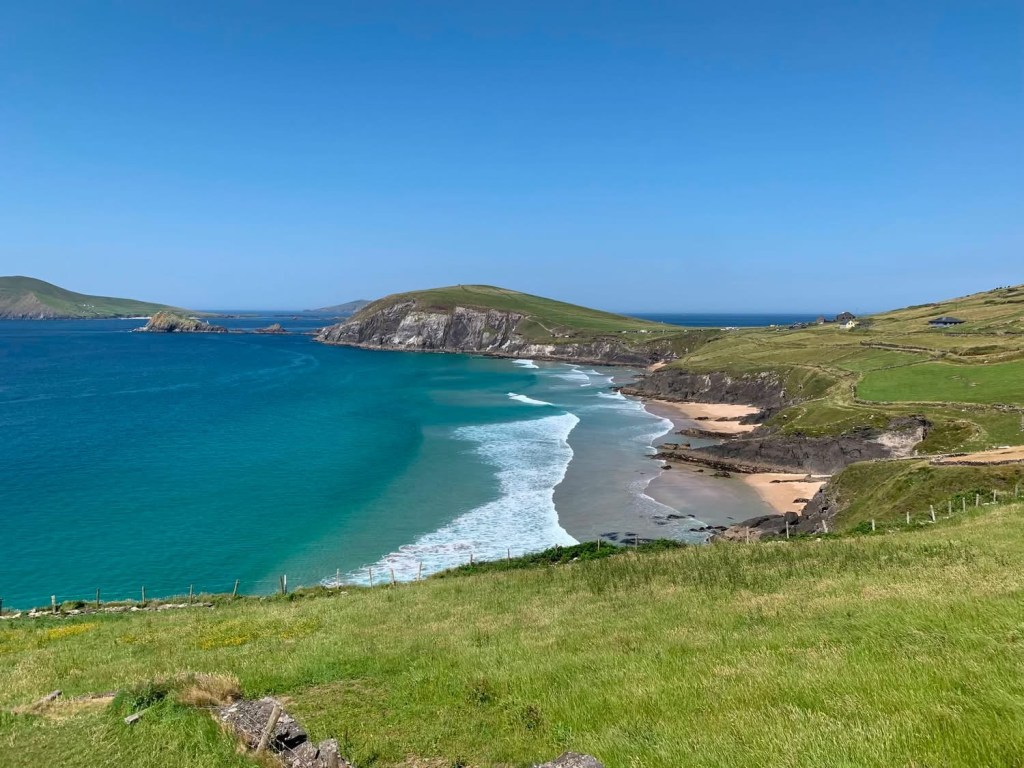
A month of slow mornings, wild coastlines, generous strangers, and leaving room for the unexpected.
Before we left, people kept asking why we were going back to Ireland instead of traveling somewhere new.
Honestly, the answer is simple: Ireland is a wonderful place to be.
The country is beautiful, the weather is mild enough to fill your days with outdoor activities, and there is always somewhere new to explore. The people are genuine and kind and have such a fun—and sometimes very dry—sense of humor. People aren’t constantly glued to their phones. The towns aren’t filled with the same big chains, and the quality of the food is amazing. There are so many talented chefs.
There is no language barrier for us, and the country feels safe. That gave the kids more freedom and independence than they often have at home. Children also seemed to be respected and treated like everyone else. Adults spoke directly to them and expected them to be part of the conversation. As the trip went on, the kids became much more comfortable speaking up, asking questions, and talking with the people we met.
Ireland also gave us space to experience each other differently. The kids bonded with one another, and I got one-on-one time with each of them depending on who joined me for a walk or an outing. I even got time to myself.
The kids were jet-lagged for almost the entire month, so most days didn’t begin until around 11. Instead of fighting it, we accepted the slower mornings. I would get up, go for a walk, and stop at a café. If one of the kids was awake, they came with me. If everyone was sleeping, I enjoyed the time alone.
It was wonderful.
One of the best things about this trip was that almost nothing was planned. We booked our Airbnbs, flew to Dublin using points, and rented a car through Avis. I had a list of ideas, but very little was firmly scheduled. If something worked out, great. If it didn’t, it didn’t.
By leaving space in our itinerary, we somehow floated into the most amazing experiences—many of which we never would have found online.
We followed tiny roads just to see where they went. We accepted recommendations from strangers. We changed plans when someone got hurt, took the long way when it looked more interesting, and regularly arrived much later than expected.
Our itinerary was never packed, yet we did so much. We surfed, biked, hiked, rode horses, went fishing and crabbing, flew in a tiny plane, crossed the water by ferry, explored beaches, climbed terrifying cliffs, and lived on a working farm.
We didn’t spend the trip checking castles off a list, and I think we ate potatoes twice.
Half the time, we didn’t know what day it was—or even what time it was. We simply lived somewhere else for a while and experienced the country that way.
Galway
Our trip began with a very tired and very appropriate mistake.
We landed in Dublin, collected our luggage, and picked up the rental car—which was even smaller than I expected, and I had intentionally reserved a small car.
As we tried to make our luggage fit in the trunk like a game of Tetris, we realized one of our bags was gone. We were afraid we had lost it, but we were equally concerned about how on earth we would fit it into the car if we found it.
Thankfully, it wasn’t lost. We had simply left it inside the airport.
Before beginning the two-and-a-half-hour drive to Galway, we went back and waited while the lovely airport employees retrieved it for us. It wasn’t a big ordeal, and no one seemed put out by the request. They simply went back inside, found our bag, and returned it to us.
With every bag finally accounted for—and somehow wedged into the car—we set off for the west coast.
Our first experience driving in Ireland was equal parts hilarious and exhausting. We were jet-lagged, adjusting to the opposite side of the road, and still hours away from our first Airbnb.
Thankfully, the summer sun stayed out late. Even when our internal clocks had no idea what time it was, there was still daylight left for exploring.
Eventually, we reached Galway.
Naturally, we ordered Guinness beef stew on our first night.
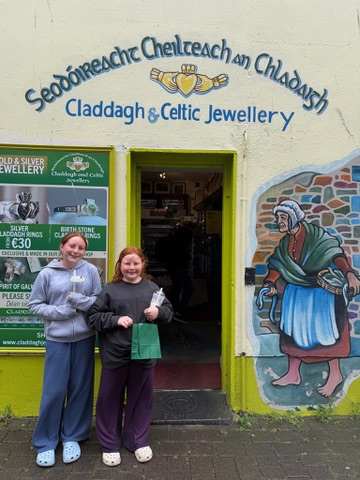
Galway was the perfect place to begin the trip. It was fun and easy to explore on foot, with restaurants, cafés, parks, playgrounds, music, and street performers everywhere.
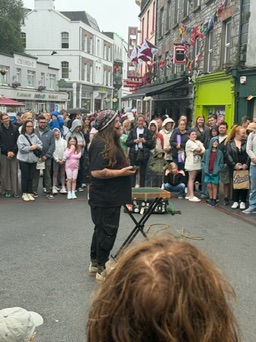
The Galway International Arts Festival was happening while we were there, adding even more life to the streets. We walked—a lot—listened to musicians, watched performers, sat in the park, and took some very memorable family photos.
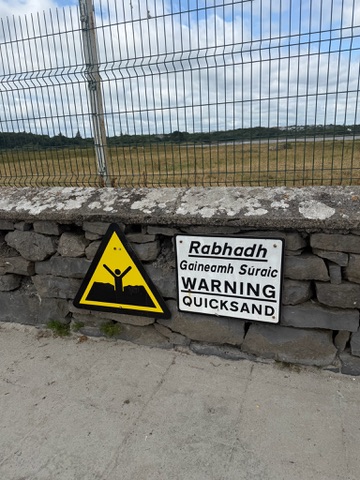
We also finally saw quicksand, which was unexpectedly exciting.
Food became a major part of our time in Galway. Some of our favorite stops were Little Lane Café and Hazel Mountain Chocolate. We had the best crêpes at Java’s and, of course, went back for more.
Along with the required Guinness beef stew, we ate delicious seafood chowder and one of the best beetroot and goat cheese salads I have ever tasted. I also discovered that my favorite Irish drinks were Guinness and the Galway Girl.
We had our final Galway dinner at The King’s Head. The food wasn’t my favorite of the trip, but the atmosphere made it completely worth going.
Some of our favorite days in Galway weren’t complicated. We walked, ate, listened to music, found playgrounds, watched street performers, and followed whatever caught our attention.
We loved nearby Salthill so much that we visited more than once. The kids played in the water, we explored the beach, and we watched sea otters playing offshore. We went to the waterfront amusement park, where there weren’t many rides, but the rides they did have were fast, fun, and surprisingly uncrowded.
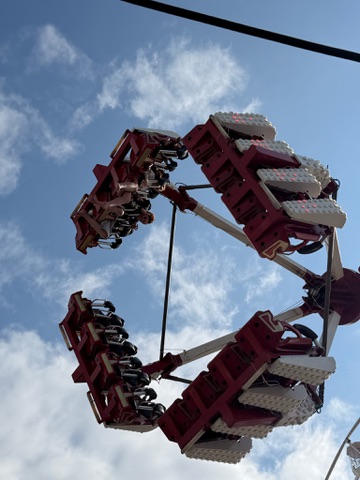
We rode our favorites again when we returned.
We also visited Silverstrand Beach, where we explored the rocks and cliffs. That was one of the things we loved about Galway: we could listen to street musicians and eat crêpes, then spend the afternoon climbing over rocks beside the sea.
One of the biggest highlights of the entire trip was flying to the Aran Islands in a very small plane.
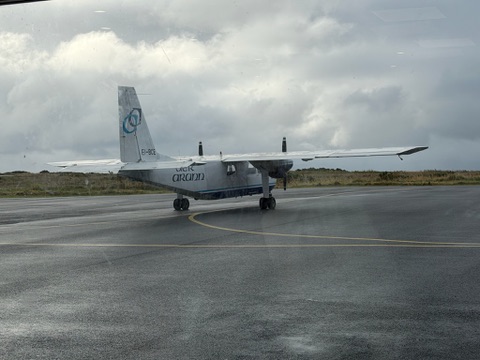

Because we flew, we arrived early and beat the crowds. We rented bikes and set off across the island while the roads were still quiet, with Hollis and Hayden leading the way.
We biked past horses, donkeys, and countless other animals. We stopped to pet them, built towers from rocks, watched seals, and ate more delicious seafood chowder.
By the time we were heading back, the island had become noticeably busier. We were especially glad we had arrived early because the seals were gone by the time the crowds appeared.
Hayden was so tired at dinner that he began falling asleep and briefly forgot he still had dessert coming. That may be the clearest sign of a successful travel day.
Instead of flying back, we took the ferry so we could see the Cliffs of Moher from the water. Watching those enormous cliffs rise above us was the perfect ending to the day.
If I were giving someone advice about visiting the Aran Islands, it would be this: fly there and take the ferry home. You arrive before the crowds, get the quiet roads for biking, and still see the Cliffs of Moher on the way back.
Westport
From Galway, we continued to Westport, a beautiful town that I immediately became obsessed with.
By that point, I had completely lost my voice, but that didn’t stop me from loving the place.
Our Airbnb host met us at the house, showed us how everything worked, and left chocolates for us. The house was in a great location, and Lennon was especially fascinated by the shower and how differently it worked.
Sometimes the smallest things are what kids find most exciting.
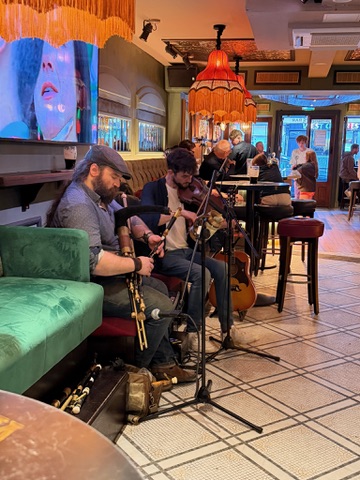
We walked around town, listened to traditional Irish music, and settled into the atmosphere. Then the entire town erupted.
We happened to arrive just as Mayo defeated Kerry to win the All-Ireland Senior Football Championship for the first time since 1951.
According to local legend, Mayo’s victorious 1951 team passed a funeral procession on the journey home without stopping to show respect. Depending on who tells the story, either a priest or a grieving relative declared that Mayo would not win another All-Ireland title until every member of that team had died.
Over the next 75 years, Mayo reached the final repeatedly and lost 11 times. The “Mayo curse” became part of Irish sporting folklore.
Then, in 2026, Mayo beat Kerry and finally brought the Sam Maguire Cup home again. After 75 years, the curse had been broken.
Westport exploded into celebration. People filled the streets, music played, and cars drove through town honking their horns. The celebration spread throughout County Mayo.

We had planned none of it and somehow walked straight into one of the biggest moments in the county’s history.
While we were in Westport, we rented bikes and rode part of the Great Western Greenway. It was such a beautiful way to experience County Mayo—outside and moving slowly enough to notice the landscape instead of watching it pass through a car window.
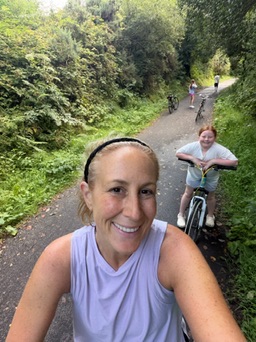
Unfortunately, Hayden fell and was injured, which meant he had to stay behind for some of our later activities. It was disappointing, and we had to change some of our original plans, but adjusting had become part of the rhythm of the trip.
We learned to let go of what we thought a day was supposed to look like and enjoy what was still possible.
We also drove to Achill Island, where sheep finally blocked the road.

It was the Irish traffic jam we had been waiting for.
Sheep and goats wandered directly in front of the car, while others slept casually along the roadside, completely unconcerned about the vehicles trying to pass.
We visited gorgeous Keem Beach and took an Achill safari aboard a jet boat. The boat jumped over the waves as we explored the island’s rugged coastline from the water.
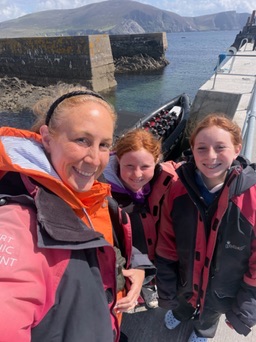
It was exciting, slightly wild, and so much fun.
Between the winding roads, wandering animals, beautiful coastline, Keem Beach, and wave-jumping boat, the day felt like one enormous adventure.
We were genuinely sad to leave Westport.
Clonakilty
The drive from Westport to Clonakilty took about four and a half hours.
Clonakilty was a quaint town with lots of live music and a surprisingly lively nightlife. We spent plenty of time walking around and even helped rescue a stray dog while we were there.
We didn’t see another American during our time in the area. Most of the people around us seemed to be vacationing there from other parts of Ireland.
That was exactly what we had hoped to find: beautiful places that people genuinely loved, rather than towns designed only for tourists.
One day, we went to Inchydoney Beach in the pouring rain.
It should have been miserable.
Somehow, we had an amazing time.
Hayden and Hollis took surfing lessons first and did incredibly well. We loved it so much that we returned for a second lesson, and the next time all four of us surfed.
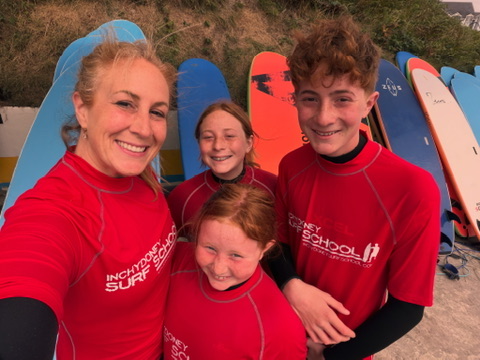
Afterward, we stayed at the beach to swim.
I was fascinated by the way the swimming area was monitored. Lifeguards stood in the ocean, while a lifeguard boat waited beyond the break to watch the rip currents, water conditions, and possible sharks. The guards moved the flags to show swimmers exactly where it was safe to enter the water.
The system made it possible to enjoy a powerful ocean while still respecting how quickly the conditions could change.
We also decided that we wanted to go fishing, which led to one of my favorite examples of Irish hospitality.
When I mentioned fishing to a man named Pat in a pub, he went and found his own fishing pole for me to borrow.
Later, while trying to find bait and tackle, we asked a fisherman for advice. His answer was wonderfully simple:
“Call Sean.”
The tackle shop was closed, but Sean lived above his pub, Kitty Mac’s. We called, and he came downstairs to open the shop—and the pub—to make sure we had everything we needed.
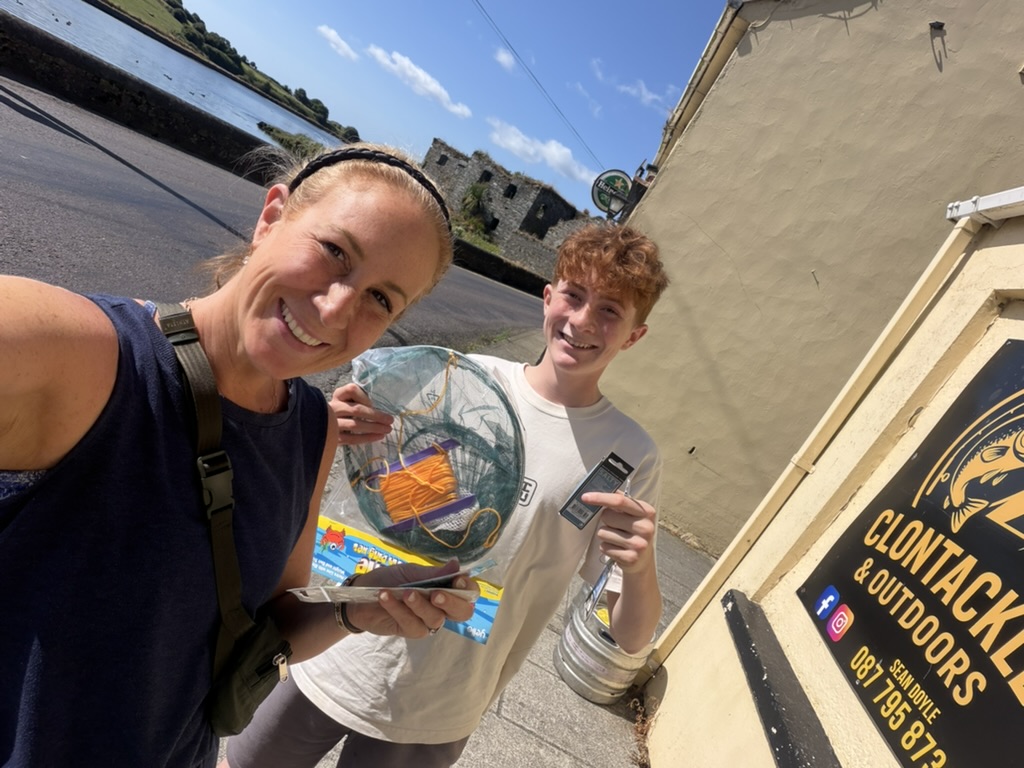
We bought a crab trap and went crabbing.
There was no complicated process and no suspicion that we might waste someone’s time or fail to return what we had borrowed. Pat lent us his fishing pole. A fisherman gave us Sean’s number. Sean opened his closed business.
People simply helped.
Clonakilty also gave me one of my favorite morning routines.
Every day, I went to Aris Café for a cappuccino and the best cinnamon bun I have ever eaten.
Most mornings, the rest of the family was still sleeping off the jet lag. If one of the kids was awake, they came with me. If everyone was sleeping, I walked alone and enjoyed having the morning to myself.
Then I ordered the same thing: a cappuccino and a cinnamon bun.
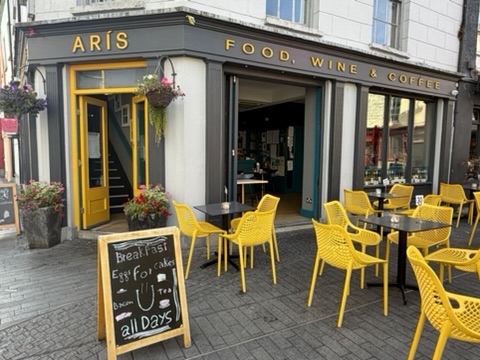
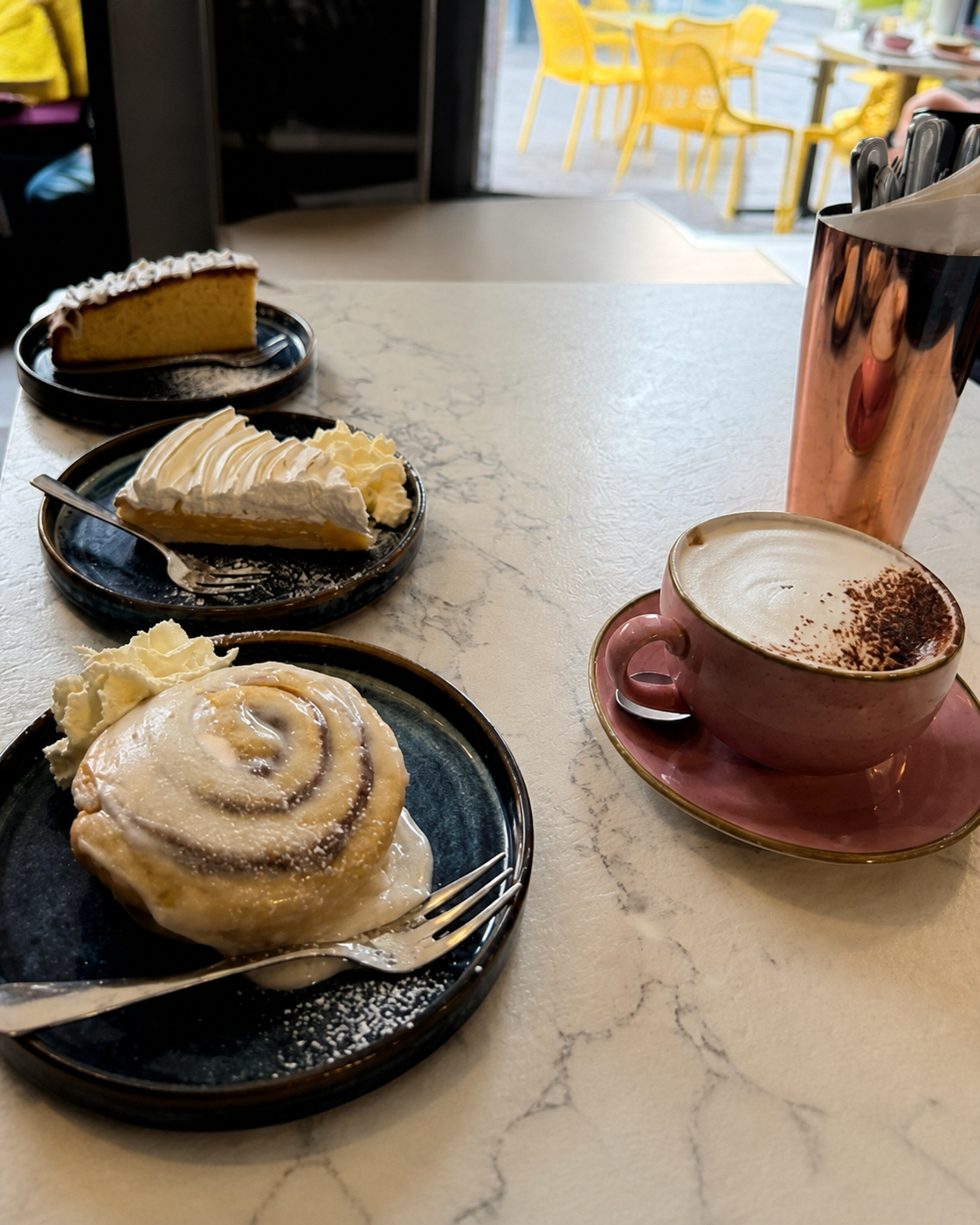
Every single day.
Those quiet walks became as memorable as many of the larger adventures. For a little while, I felt less like someone passing through and more like part of the town—someone with a familiar route, a favorite café, and a usual order.
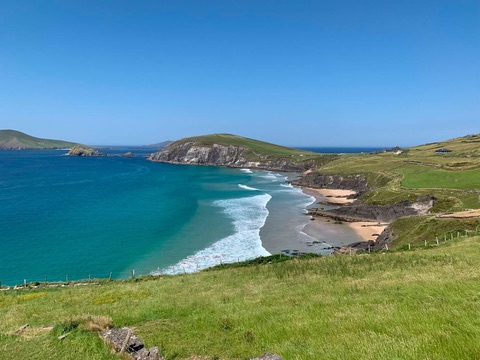
We also discovered Dunworley Beach, a quiet, spectacular place with crystal-clear, aquamarine water.


We swam, climbed the surrounding cliffs, and kept looking around in disbelief. It was hard to imagine that somewhere so beautiful could also feel so peaceful and uncrowded.
It wasn’t a famous attraction we had rushed to cross off a list. It was simply a beach we found and loved.
That made it even better.
One evening, we took one of the most beautiful drives of the trip toward Galley Head Lighthouse.
The road became smaller and smaller as we traveled, winding through the countryside until it seemed barely wide enough for our tiny car.
When we reached the end, there was no convenient place to turn around. We had to perform what felt like a 75-point turn, carefully maneuvering so we didn’t end up in a pasture—or drive off a cliff.
Then we began walking.
We crossed boggy ground and followed the cliffs near the lighthouse. The drops were sheer. There were no railings, almost no signs, and nothing separating us from the edge.
It was terrifying.
It was also one of the most stunning places I have ever seen.
We walked across cliffs and bogs while the ocean stretched out below us, then stayed to watch the sunset. There were no crowds directing us toward an official viewpoint and no barriers separating us from the experience.
It felt wild, raw, and almost untouched.
Galley Head became one of our favorite nights of the entire trip. It was unforgettable precisely because it wasn’t polished or easy to reach. We found it because we were willing to follow a tiny road and see where it led.


Ballyfoyle and the Farm
When it was time to leave Clonakilty and drive to the farm near Ballyfoyle, I didn’t want to take the highway.
I wanted to drive through Ireland.
That decision brought us to The Vee, where we stopped for what we thought would be a manageable hike.
It was far more intense than we expected.
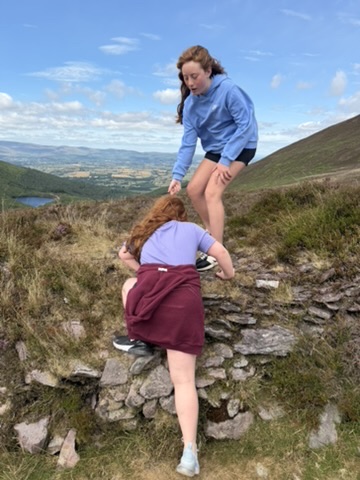
The route was steep and rocky, with plenty of scrambling. Our entire family shared one bottle of water, which was clearly not enough. Still, we continued climbing.
When we finally reached the top, the view was unbelievable.
Near The Vee, we found large piles of stone called cairns. Cairns have been built for generations as trail markers, summit markers, landmarks, and memorials.

The route passes Grubb’s Monument, a large stone cairn marking the resting place of Samuel Grubb, who died in 1921. Another cairn stands near the top of Sugarloaf Hill.
Hayden explained the history and tradition to us. Following what he had learned, we moved a stone from one pile to the other, briefly adding our own small action to a place shaped by everyone who had climbed it before us.
We thought the hike down would be quicker.
It may have been, but it was definitely scarier.
Once we were safely down, we stopped at a mountainside food truck and rewarded ourselves with miniature pancakes, coffee, and hot chocolate.

Between the scenic route, unexpected mountain climb, rock scrambling, cairns, and food truck, we arrived at the farm at 8:30 instead of the 5:00 arrival time I had originally imagined.
That was becoming normal for us.
When we finally arrived, fresh bread, milk, eggs, butter, and wine were waiting for us.
After we settled in, William came over and told us about the property. He had grown up in the farmhouse where we were staying, and the farm had been in his family for more than 100 years.
He asked what had brought us to a farm in the middle of Ireland. I told him that whenever I looked at other people’s travel routes, they always seemed to form a ring around the country. I knew there had to be amazing places in the middle too—so there we were.
As I told him about our trip, William said it sounded like something out of a movie and that hearing about it made him fall in love with Ireland all over again.
By the time we finished talking, it was almost 10 p.m. and all the grocery stores were closed. William and Searlait brought food from their own kitchen so we could make dinner.
We couldn’t have asked for better hosts. William and Searlait gave us free rein to explore the farm and made us feel completely at home.
We watched the cows being milked, walked among them, helped feed them, and visited the calves and sheep. We wandered through the fields, and the kids were free to roam.
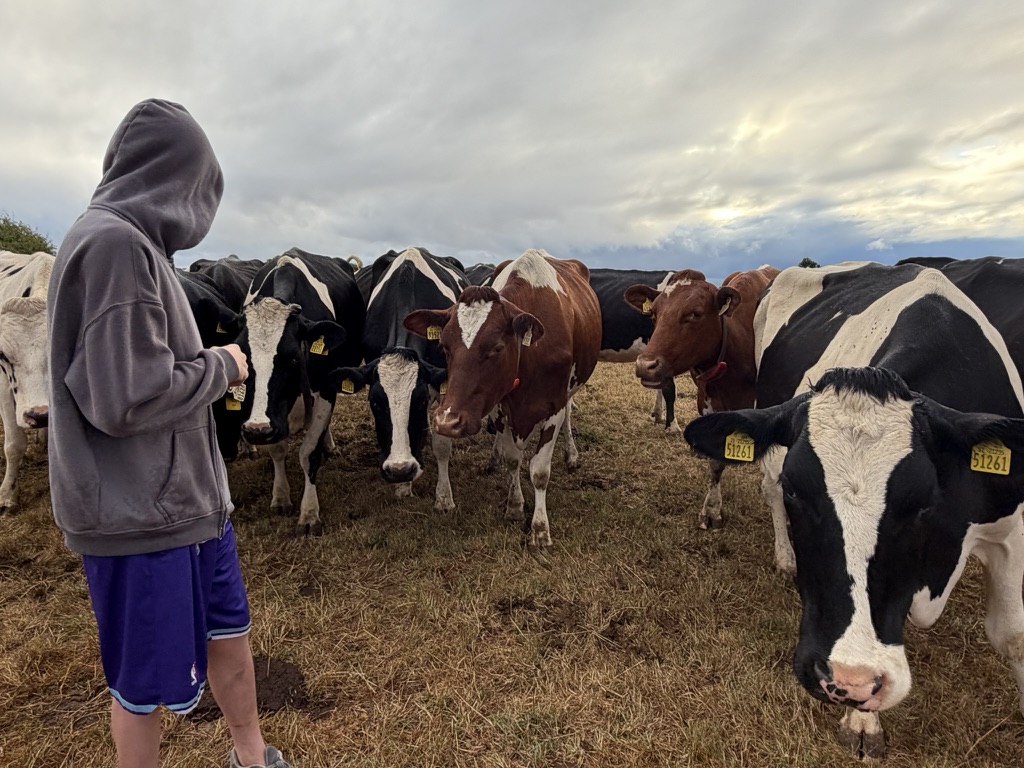
Blackberries grew everywhere, so I spent the week eating them directly from the bushes.
The farmhouse was large enough for everyone to spread out and completely decompress. After moving between towns and restaurants, it was wonderful to go to the grocery store and cook for ourselves.
Hayden grilled amazing steaks. Hollis made crêpes. Lennon prepared eggs and tea.
We slowed down.
William and Searlait had four children: two girls, ages eight and eleven, and two boys, ages eleven and sixteen.
Our girls played with their girls and explored the farm together. They especially loved the treehouse that one of the older brothers had built. The children brought us more eggs, adding to the feeling that we had been welcomed into their everyday lives.


We also fell in love with the farm dogs, Molly and Nancy, and frequently invited them into the farmhouse.

The cats were welcome too.
We played Twister, Chicken Foot, and chess. We drank tea, cooked meals, walked through the fields, visited the animals, and enjoyed not having anywhere urgent to be.
The farm wasn’t the most action-packed part of the trip, but that was exactly why we loved it. It gave us time to be together without always moving toward the next activity.
We took a day trip to hike to a waterfall.
The waterfall itself was admittedly a little underwhelming. We live in North Carolina, where we have spectacular waterfalls, and Ireland was experiencing a drought.
Still, it was a lovely hike—and we had delicious ice cream afterward.
Not every destination needs to be extraordinary to become part of a good day.
We also took a day trip to Kilkenny and returned to Louie’s, a café we had enjoyed during a previous visit. Hayden bought a watch, and we spent time walking around the city.
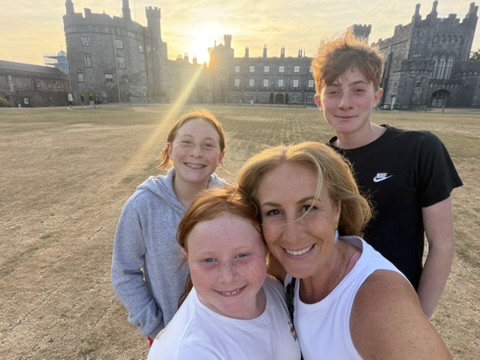
Returning to a familiar café in a place away from home made Ireland feel less like a destination we were touring and more like somewhere we knew.
Horseback riding was one of the few things we really wanted to do but could not seem to arrange.
I finally found a place, only to realize the day before that we needed to pay in cash. We didn’t have enough cash, and I had brought a credit card rather than a debit card. Since I couldn’t simply withdraw money, I went into a bank branch and tried to find a solution.
Even then, I wasn’t sure the ride would happen.
I texted the owner and heard nothing. I waited and texted again. Eventually, I explained that if we were going to arrive on time, we needed to leave by 9:15.
At 9:30, he finally replied:
“Just come on. We’ll figure it out.”
So we raced out of the farmhouse. I managed to say goodbye to William and Searlait, while the kids rushed through their own goodbyes. Then we drove to the riding center.
The man who met us looked exactly like an Irish Marlboro Man. He had a huge personality—funny, irreverent, and immediately entertaining. He joked with all of us and playfully tested Lennon’s balance on her horse. She quickly realized she was much steadier and more capable than she thought, giving her the confidence to relax and enjoy the ride.
We rode wonderful horses through the Irish countryside.
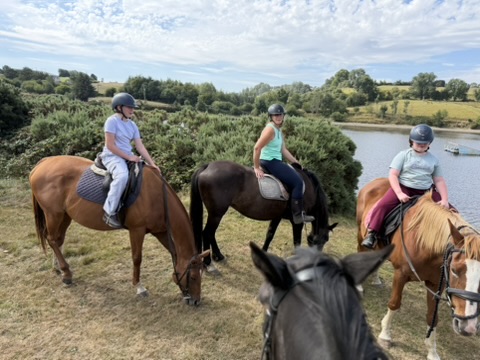
The property was also an accomplished polo training center, with awards displayed throughout the facility. The horses were excellent, and we loved the ride.
It was chaotic, funny, slightly confusing, and completely perfect—our final adventure before returning to Dublin.
“Just come on. We’ll figure it out” seemed to capture something essential about our experience in Ireland.
At gas stations, you pump before you pay. People lend you their belongings and trust you to take care of them and return them. Your word means something.
The first assumption is often that people will do the right thing.
Strangely—and sadly—that became one of the biggest culture shocks of the trip.
I could see some initial skepticism in the kids too. They weren’t accustomed to strangers trusting people so readily. But that hesitation quickly disappeared as they experienced the same kindness over and over again.
Pat lent us his fishing pole. Sean opened his closed shop. The horseback-riding owner told us to come even though we hadn’t worked out the payment. William and Searlait welcomed us onto their family’s farm and trusted us to explore it.
Trust wasn’t treated as something we had to earn before receiving it.
It was offered first.
Dublin and Home
After horseback riding, we drove to Dublin, checked into our hotel, and returned the rental car.
We took an Uber to Temple Bar, ate at a restaurant we had enjoyed before, listened to music, and walked through the city. We also saw the eclipse.
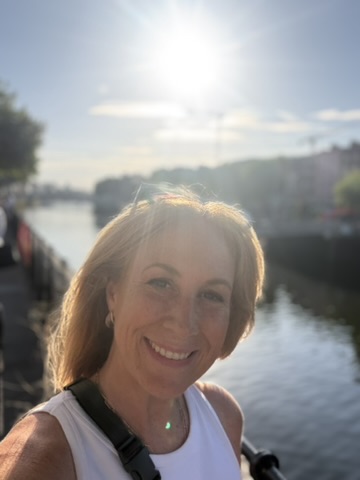
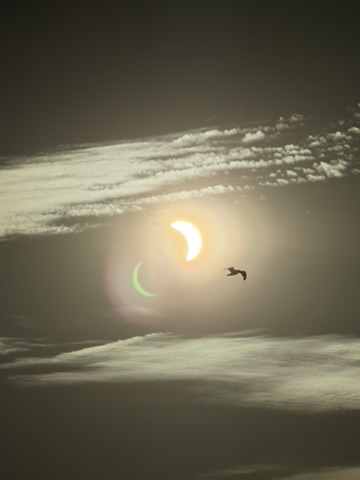
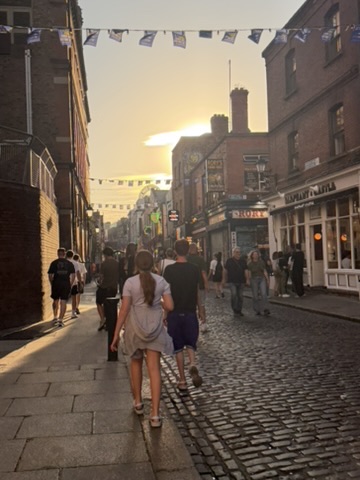
Dublin had changed since our previous visit. We didn’t especially enjoy the late-night crowd, so we decided not to stay long. We returned to the hotel and spent the rest of the evening decompressing before our flight.
The next day, our journey home was completely uneventful.
Except, of course, it wasn’t.
We were so busy gathering snacks and picking up last-minute things that we forgot we still had to clear customs before leaving. We realized it just as our plane began boarding.
Somehow, we made it through customs, reached the gate, and got onto the flight.
It was a fitting end to a trip that began with us leaving a suitcase inside the airport.
Why We’ll Go Back
We could have scheduled every day, reserved every activity, researched every restaurant, and stayed on the highways.
But then we might have missed The Vee.
We might never have found Dunworley Beach, called Sean, met Pat, surfed in the rain, eaten blackberries in the fields, climbed the cliffs near Galley Head, or raced off to ride horses with the Irish Marlboro Man.
We might not have arrived in Westport just as Mayo ended a 75-year wait.
We might not have found my daily cappuccino and cinnamon bun, watched the kids explore the farm with new friends, or learned how much independence they could handle when given the space.
The trip wasn’t perfect. We forgot luggage, battled jet lag, lost my voice, changed plans after a bike injury, shared far too little water during a strenuous hike, struggled to find cash, and nearly forgot about customs.
But the things that went wrong often led us toward the things that felt most right.
The kids bonded with one another. They became more comfortable speaking for themselves and talking with the adults they met. We had time together, time in smaller groups, and time alone. We ate well, played games, explored outdoors, met generous people, and stopped worrying about what day it was.
That is why we returned to Ireland instead of going somewhere new.
We didn’t go there to complete an itinerary.
We went there to live somewhere else for a while.
We arrived with places to stay and a few possibilities.
Ireland took care of the rest.
 Room to Wander
Leave a comment